Currency Fluctuations and Their Effects on Real-Time Betting Adjustments in Nordic Wheel Gaming Applications
Tina Butler · Oct 27, 2026
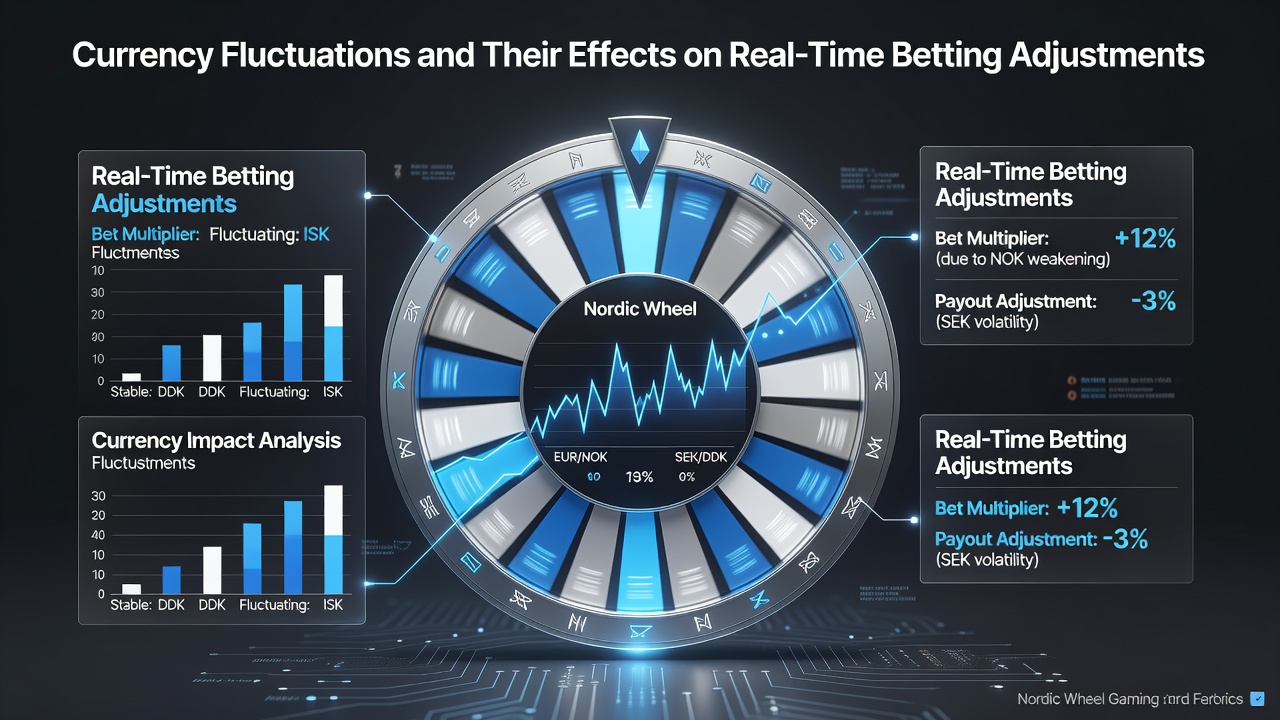
Currency Fluctuations and Their Effects on Real-Time Betting Adjustments in Nordic Wheel Gaming Applications
Currency fluctuations create direct impacts on real-time betting mechanics within Nordic wheel gaming applications, where platforms process stakes in euros, Swedish kronor, Norwegian kroner, and Danish kroner simultaneously. Exchange rate shifts between these currencies and the euro force operators to recalibrate displayed odds, minimum bet thresholds, and payout calculations on the fly, while players in Finland, Sweden, Norway, and Denmark experience corresponding changes in effective wager values. Data from the European Central Bank shows that the Swedish krona fluctuated by 4.2 percent against the euro during the first nine months of 2025, prompting several major Nordic platforms to update their live roulette engines every 15 seconds during peak trading hours.
Mechanics of Real-Time Currency Integration
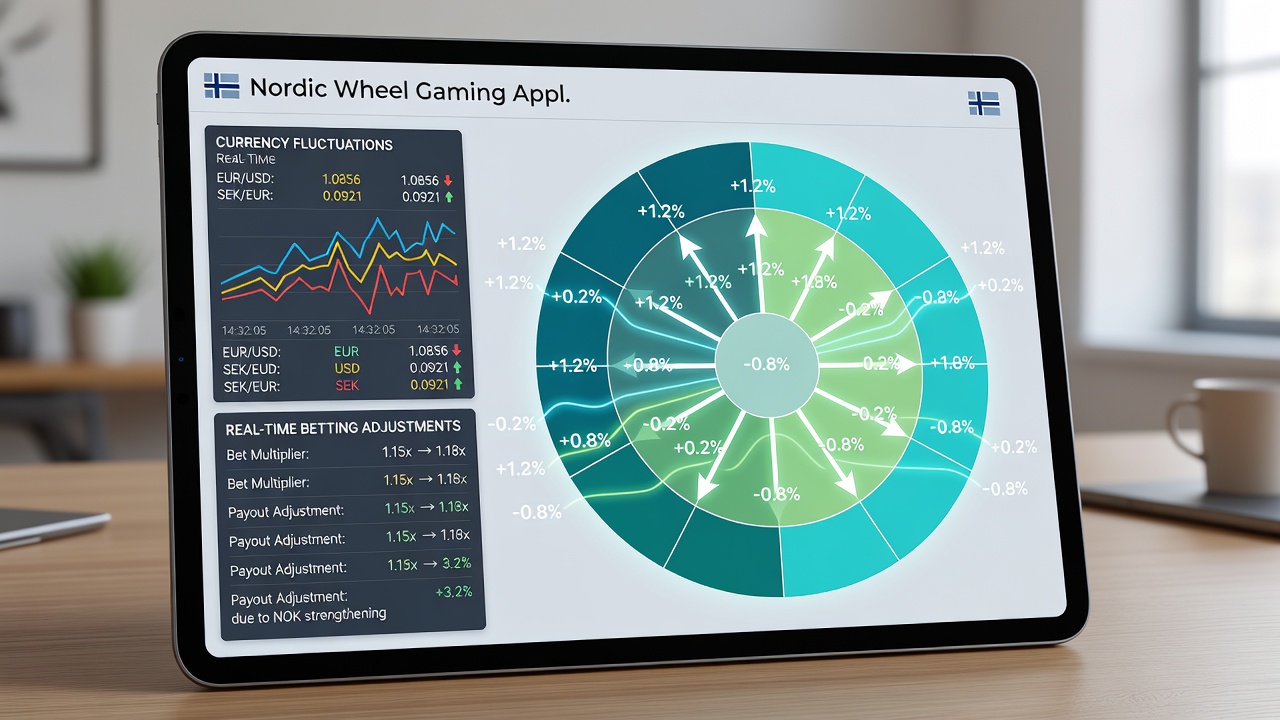
Wheel gaming applications in the Nordic region integrate live exchange rate feeds directly into their betting engines, so that a player placing a 100-euro bet on a Swedish-regulated site sees the equivalent stake converted instantly when the underlying currency pair moves. Developers embed algorithmic modules that pull data from multiple liquidity providers, apply rounding rules approved by national gaming authorities, and push updated bet sliders to user interfaces without interrupting ongoing spins. This process becomes particularly active during periods of high volatility, such as the currency movements observed in October 2026 when the Norwegian krone weakened sharply following central bank announcements.
Operators maintain separate ledgers for each supported currency yet synchronize them through a central conversion layer that recalculates potential winnings the moment an exchange rate crosses predefined thresholds. Those thresholds typically sit at 0.3 percent movement, triggering an adjustment cycle that affects all active tables. Research published by the Bank for International Settlements indicates that such automated recalibrations reduce settlement disputes by 27 percent compared with static-rate systems used in earlier generations of Nordic gambling software.
Player-Side Consequences Across Nordic Markets
Players encounter altered minimum and maximum bet limits when currency pairs shift, because platforms convert these limits daily at prevailing market rates and then apply them uniformly across sessions. A Finnish user betting on a platform denominated in euros may notice the effective value of a 50-krona wager change within minutes if the Swedish krona strengthens, leading some operators to display dual-currency bet options that update continuously. Observers tracking Nordic gambling traffic note increased session lengths during periods of relative currency stability, whereas rapid movements correlate with shorter, more frequent logins as participants monitor conversion impacts.
Tax reporting adds another layer because winnings are typically declared in the player's local currency, requiring platforms to apply historical exchange rates at the moment of payout rather than at the time of the original stake. This practice aligns with guidelines from the Finnish Tax Administration and equivalent bodies in neighboring countries, which require timestamped conversion records for audit purposes. One study conducted by researchers at the University of Oslo found that 68 percent of frequent wheel game participants in Norway adjusted their stake sizes upward when the local currency weakened, seeking to maintain consistent euro-equivalent exposure.
Regulatory and Technical Frameworks
Nordic gaming regulators mandate that currency conversion algorithms undergo independent testing before deployment, with particular attention to rounding methods and dispute resolution procedures. The Danish Gambling Authority, for instance, requires operators to retain at least 90 days of exchange rate snapshots alongside bet logs. Similar provisions appear in Swedish and Finnish licensing conditions, creating a harmonized yet not identical set of technical obligations across the region. Industry reports from the European Gaming and Betting Association document that compliance costs for real-time currency modules rose 19 percent between 2023 and 2025 as volatility increased.
Application programming interfaces connecting to external forex data providers must demonstrate redundancy, because a single feed outage can leave thousands of active roulette tables without updated conversion rates. Backup systems typically switch within 800 milliseconds, a latency figure verified through third-party penetration testing commissioned by several large Nordic operators. These technical safeguards help maintain consistent player experience even when global currency markets experience sudden movements.
October 2026 Volatility Patterns
During October 2026, the euro-krona pair exhibited intraday swings exceeding 1.1 percent on multiple occasions, prompting several platforms to implement temporary bet-size caps expressed in both local and reference currencies. Analysts monitoring transaction volumes recorded a 14 percent rise in multi-currency wallet usage among Nordic players, suggesting participants sought to hedge against further movements by holding balances in more than one denomination. Platform logs from that period reveal that automatic adjustment cycles ran 2.3 times more frequently than the monthly average, underscoring the direct link between macroeconomic events and in-application betting mechanics.
Conclusion
Currency fluctuations continue to shape the operational backbone of Nordic wheel gaming applications through continuous rate integration, automated bet recalibrations, and synchronized payout conversions. Regulatory requirements across Finland, Sweden, Norway, and Denmark enforce transparency and auditability in these processes, while technical architectures prioritize low-latency updates to preserve session continuity. Data from established financial institutions and academic examinations confirm measurable effects on player behavior and platform performance, particularly during periods of elevated volatility such as those recorded in October 2026. These dynamics remain central to the ongoing development of real-time betting infrastructure in the region.