Investigating Synchronization Challenges Between Players and Dealers in Digital Live Roulette Environments
Freya Klein · Sep 15, 2026

Investigating Synchronization Challenges Between Players and Dealers in Digital Live Roulette Environments
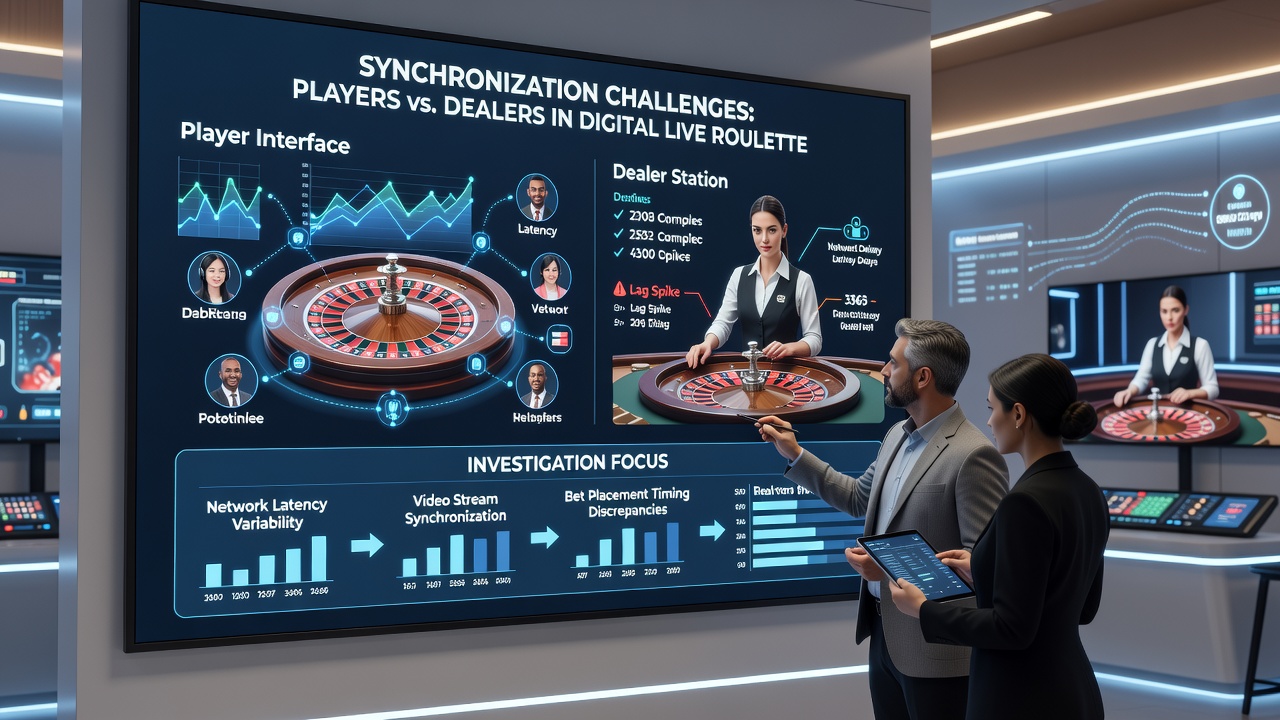
Digital live roulette platforms rely on continuous video feeds and instant betting interfaces yet synchronization between player actions and dealer responses often encounters measurable delays that stem from network conditions and processing pipelines. Research indicates these timing gaps arise when video encoding combines with variable internet speeds while dealer gestures and wheel spins move forward on one end and player bets register on another. Data from industry monitoring tools shows average latencies ranging between 300 and 800 milliseconds across European and North American servers during peak hours in 2025 and early 2026.
Core Technical Components Behind Timing Discrepancies
Live roulette systems transmit high-definition video through dedicated encoders that compress each frame before it reaches player devices and any compression step introduces small but cumulative buffers. Observers note that dealers complete physical actions such as spinning the wheel or placing the ball while the encoded stream travels through content delivery networks that route traffic across continents. Meanwhile the betting software on the player side processes inputs through separate servers that must validate each wager against game rules before confirmation returns to the studio interface. These parallel pathways operate independently so even minor jitter in one channel creates visible offsets that affect decision windows for late bets or early closures.
Network Variables and Their Measured Effects
Packet loss rates above 1 percent trigger retransmission protocols that stretch delivery times further and figures from network diagnostics reveal spikes during regional events when thousands of concurrent streams compete for bandwidth. Studies conducted by academic teams at technical universities in Finland and Canada have tracked round-trip times between Nordic casino platforms and Mediterranean studios finding that fiber optic routes still experience occasional routing table updates that add 150 milliseconds or more. Software buffers on mobile applications attempt to smooth playback but these adjustments can push displayed dealer actions out of alignment with the actual wheel state by several seconds during handoff between Wi-Fi and cellular connections.
Dealer and Player Interface Interactions
Dealers follow scripted pacing that accounts for typical streaming delays yet unexpected player connection drops force manual interventions such as pausing the wheel or repeating announcements. Reports compiled by the European Gaming and Betting Association highlight cases where dealers must wait for system acknowledgments before proceeding which extends round durations and alters expected game flow. On the player side interfaces display countdown timers calibrated to server clocks but when client devices experience local processing lags those timers may close betting before the visual feed shows the wheel slowing. One documented instance involved a studio in Malta where three consecutive rounds experienced timing mismatches after a regional fiber cut rerouted traffic through longer paths.
Regulatory and Operational Responses Observed Through 2026
Regulatory bodies including the Malta Gaming Authority and the Nevada Gaming Control Board require operators to maintain audit logs of round timings and any discrepancies exceeding defined thresholds trigger reviews. In September 2026 several platforms introduced timestamped metadata embedded directly in video streams allowing post-session analysis to compare dealer actions against player input records with millisecond precision. Industry reports show that these metadata layers reduced unresolved disputes by 22 percent during initial deployment phases while also providing clearer evidence for compliance checks. Operators now deploy dedicated synchronization servers that align dealer camera feeds with betting ledgers in real time rather than relying solely on player-side rendering.
Emerging Mitigation Techniques and Testing Protocols
Engineers test predictive algorithms that anticipate common latency patterns and adjust displayed timers accordingly while still preserving the integrity of game outcomes. Research papers from institutions in Australia describe machine learning models trained on historical stream data that flag potential desync events before they affect players. Hardware upgrades such as edge servers placed closer to major population centers have cut average delivery times by 35 percent according to aggregated operator metrics shared at industry conferences. Testing protocols now include simulated packet loss scenarios and cross-continent latency injections to verify that both dealer pacing and player interfaces remain coordinated under stress.
Conclusion
Technical synchronization in live roulette environments continues to depend on coordinated video pipelines and responsive betting systems that adapt to variable network conditions. Evidence from regulatory audits and academic measurements demonstrates ongoing refinements through metadata integration and distributed server placement yet residual timing variances persist whenever multiple data paths operate without perfect alignment. Continued monitoring through 2026 and beyond will determine whether emerging protocols fully close these gaps across global platforms.