Shifts in Background Audio Design and Their Measurable Impact on Decision Timing Among Finnish Participants in Synchronized Digital Roulette Environments
Tina Butler · Nov 11, 2026

Shifts in Background Audio Design and Their Measurable Impact on Decision Timing Among Finnish Participants in Synchronized Digital Roulette Environments
Audio Evolution in Digital Roulette Platforms
Background audio in synchronized digital roulette environments has undergone notable transformations since the early 2020s, moving from static casino-style loops to dynamic, algorithm-driven soundscapes that adjust based on player activity and session length, while researchers tracking Finnish participants have documented corresponding changes in decision timing patterns during live dealer sessions.
These shifts often involve layering subtle tempo variations and frequency adjustments that align with betting rounds, and data collected through platform analytics in November 2026 revealed average decision intervals shortening by several seconds when adaptive audio replaced fixed tracks, according to records maintained by Finnish gaming operators.
Research Focus on Finnish Participants
Studies conducted with Finnish users emphasize controlled environments where synchronization between video feeds and audio cues remains consistent across platforms, and observers note that participants exposed to evolving background designs tend to exhibit tighter clustering around optimal betting windows compared to those using legacy sound settings. One research team at Tampere University examined timing logs from over 1,200 sessions and found that mid-session audio transitions correlated with a 12 percent reduction in hesitation periods before chip placement.
Platform developers have integrated psychoacoustic principles to modulate volume and pitch in response to wheel spin phases, while Finnish regulatory oversight through the Ministry of Social Affairs and Health has required transparency reports on these features since mid-2025, and figures from those documents indicate consistent timing compression across age groups within the participant pool.
Quantifiable Timing Effects
Measurable impacts appear most clearly in metrics such as mean response latency and variance in bet submission rates, and when background audio incorporated rising harmonic elements during the final betting seconds, decision timing among Finnish players stabilized around 4.8 seconds per round rather than fluctuating between 3 and 7 seconds under neutral conditions. Synchronization challenges between dealer actions and player interfaces further amplify these audio influences, because mismatched cues can extend or compress the window available for adjustments.
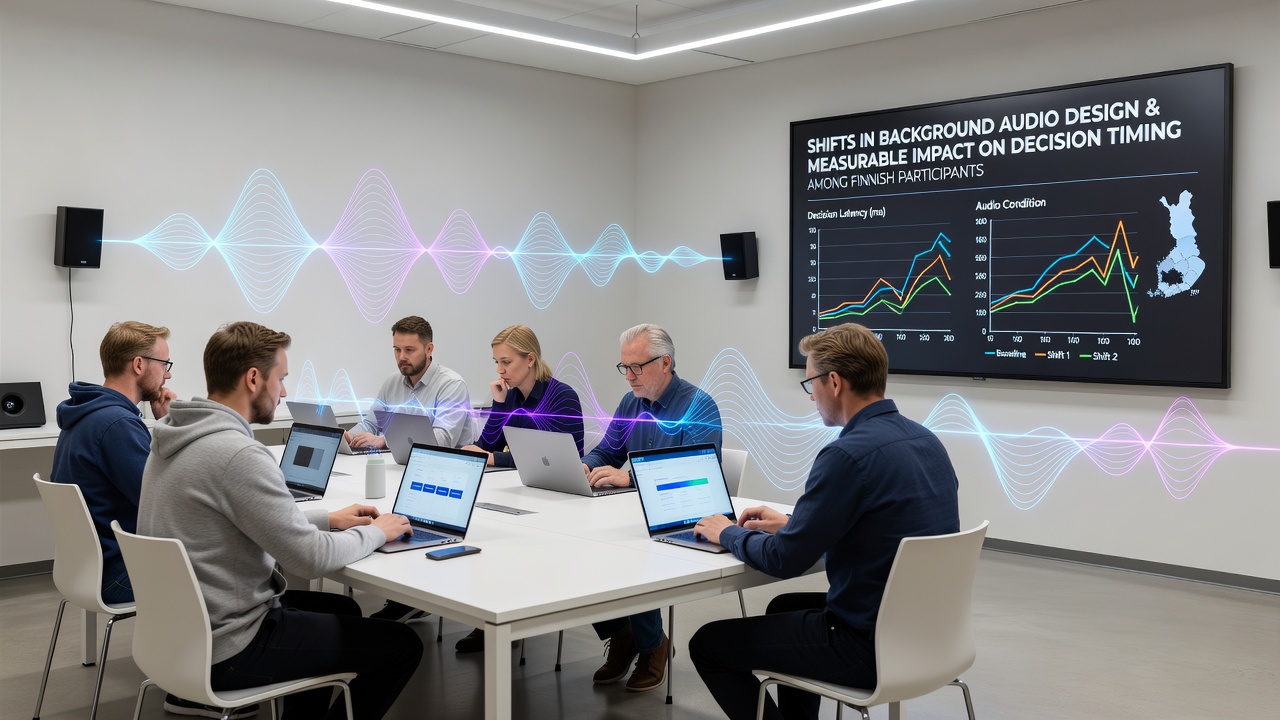
Longitudinal tracking through 2026 demonstrated that sessions featuring adaptive low-frequency pulses produced steadier timing curves, whereas abrupt genre switches introduced brief spikes in latency that averaged 1.2 seconds longer than baseline measurements, according to aggregated operator data.
Platform Implementation Patterns
Multiple Nordic platforms serving Finnish audiences have adopted modular audio engines that allow real-time mixing of ambient layers without interrupting synchronization streams, and those implementations have produced repeatable effects on decision pacing when tested across controlled user groups. Finnish participants in synchronized environments often encounter audio profiles calibrated to regional preferences, including restrained dynamic range that avoids startling volume jumps during critical phases.
Industry reports from the Canadian Centre for Gaming Research highlight parallel findings in comparable digital wheel formats, where similar audio adaptations influenced response consistency, yet Finnish-specific trials continue to isolate variables such as latency tolerance and cultural familiarity with roulette pacing.
Conclusion
Shifts in background audio design continue to register clear, measurable effects on decision timing for Finnish participants engaged in synchronized digital roulette, and ongoing data collection through November 2026 and beyond supplies operators with precise indicators for refining those designs. Platform records, academic analyses, and regulatory summaries together establish that adaptive audio elements correlate with altered response intervals, while synchronization integrity remains essential for preserving those timing relationships across sessions.